

International Women’s Day is celebrated each year on 8 March and provides an opportunity to reflect on advancing women’s rights in society – both the progress made and the work still to be done.
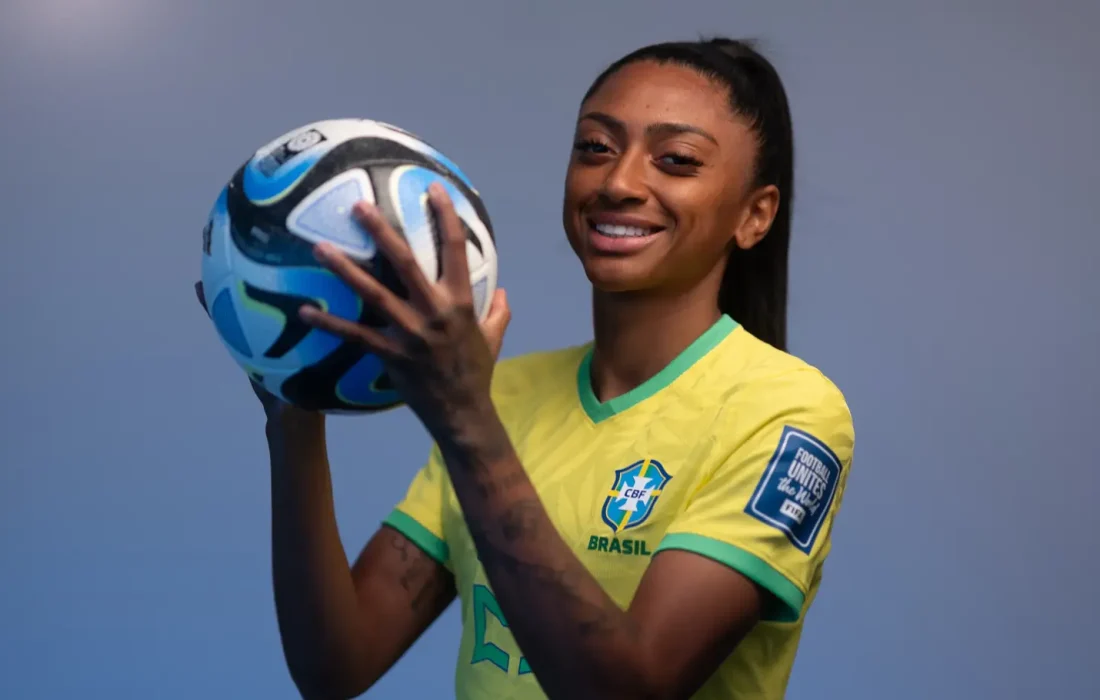
With that in mind, and looking ahead to the FIFA Women’s World Cup 2027™ in Brazil, Manchester City and Canarinha forward Kerolin sat down with FIFA to discuss the tournament’s impact on the generations of girls who dream of following in the footsteps of yesteryear’s giants of the game.
At 25 years old, the former North Carolina Courage star can hardly contain her excitement at the prospect of playing in the showpiece tournament in her home country. Kerolin’s focus, however, is equally placed on the tournament’s impact.
“I think a lot about how much it will contribute to our sport in Brazil and how many more girls we can turn into top players,” she said. “We can establish ourselves as role models for the stars of tomorrow. Hosting the World Cup will bring the sport ever closer to girls across Brazil.
“It’s hard to describe the feeling when I think about playing in a World Cup in my own country. And with everything that’s happening off the pitch, there couldn’t be a better time for the tournament to be staged in Brazil.”
The 2027 instalment will be the tenth FIFA Women’s World Cup™, and will be a watershed moment not just for Brazil but for the continent as a whole, since it will mark the event’s debut on South American soil. With their place at the finals already confirmed as hosts, the expectations of a long-awaited World Cup title for Brazil’s women have soared to new heights.
Kerolin underlined that Arthur Elias’ charges are already “much better respected and viewed as more of a threat”, while pointing to the importance of the CONMEBOL Copa America Femenina 2025 as a perfect opportunity to test themselves ahead of the World Cup two years further down the line.
“Our aim is always to go for glory in every tournament we play in,” she continued. “But we also need to prepare as best we can for the World Cup in Brazil – I think it’s going to be a great World Cup.”
“Having made it back on to the podium [by winning silver at the Women’s Olympic Football Tournament Paris 2024] and proven that we are a match for any of the world’s top sides, there is cause for optimism not only amongst the players, but also the fans, our families and everyone else who’s behind us. That should help us grow women’s football in Brazil and bring our domestic game up to the same standard as other leagues around the world, because there’s no doubting we have talent in spades.”
The superstar forward made the move to Manchester City earlier this year, and seeing the work being done with the club’s women’s youth set-up first-hand has been a source of great inspiration.
“I see girls as young as seven or eight already training at City – it’s something I’m looking at,” she admitted. “Together with my business partners and with certain projects already under way, we’re looking very closely at that being one of the focal points of our future plans.”
It’s easy to see why the São Paulo-born icon believes the FIFA Women’s World Cup 2027 will be a path-breaker for girls of all different ages and nationalities, not least because Kerolin herself is still dreaming of capturing the coveted crown. The additional edge of getting her hands on the trophy in her homeland provides a powerful incentive.
“I think everyone’s goal when it comes to the World Cup is to go all the way,” the forward stated. “The aim is to be crowned champions, because we want to make history for ourselves, our families, the national team and, without question, those aspiring to become footballers.
“When I stop and think about the World Cup taking place in Brazil, I think about my family watching the games, the friends I’ve played football with since I was very young. For them to be there cheering you on is an added source of motivation. If you start to feel tired, you hardly notice it, because you’re just drinking in the moment.”
Kerolin recognises that the anticipation in the build-up to the global finals could be a game changer on and off the pitch. It could galvanise a new generation of players and consolidate Brazilian women’s football as a force to be reckoned with, while inspiring young girls with big dreams into champions before they even step out on to the pitch.